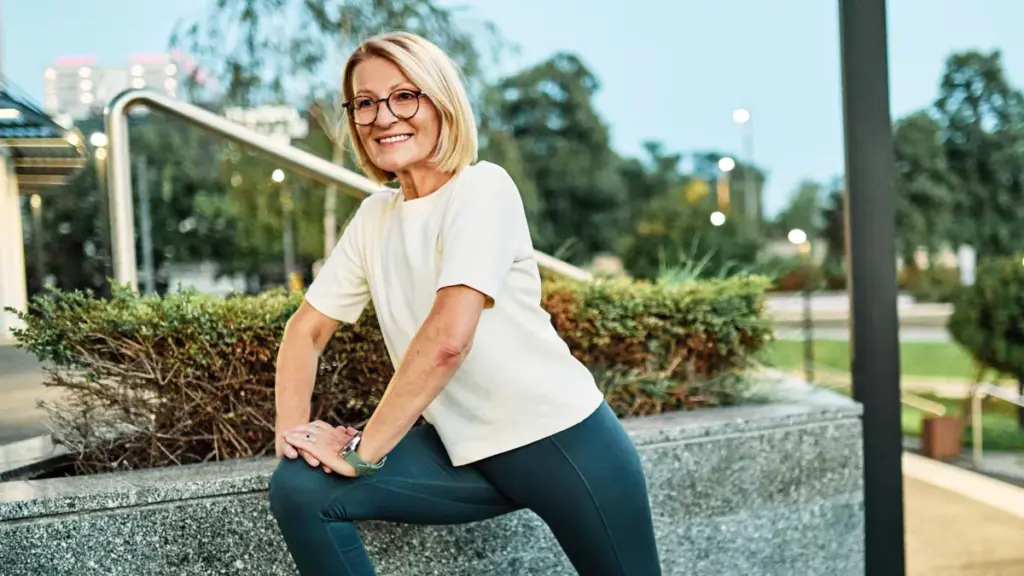
As we grow older, maintaining muscle strength becomes increasingly important for staying active, independent, and confident in everyday life. Starting around the age of 30, adults may gradually begin losing muscle mass as part of the natural aging process. This age-related decline in muscle tissue is commonly known as sarcopenia, and it can become more noticeable after the age of 60. Reduced muscle strength may make ordinary activities—such as climbing stairs, getting up from a chair, carrying groceries, or maintaining balance—feel more difficult than they once did.
The good news is that regular strength training can help slow down this decline and, in many cases, improve muscle strength, mobility, balance, and overall physical function. Strength training does not necessarily require heavy barbells, complicated gym machines, or intense workout sessions. Simple bodyweight exercises can provide enough resistance to challenge the muscles, strengthen the joints, improve posture, support bone health, and make daily movements easier.
Bodyweight training is especially useful for adults in their 60s because the exercises can be modified according to individual fitness levels. Beginners can use a wall, chair, countertop, staircase railing, or exercise mat for additional support. As strength and confidence improve, the movements can gradually be made more challenging by increasing repetitions, extending exercise duration, or adding light resistance.
Why Strength Training Becomes More Important After 60
Muscle strength affects far more than physical appearance. Strong muscles help support the joints, stabilize the body, protect the spine, and reduce the likelihood of falls. Regular resistance exercise may also support a healthier metabolism and contribute to stronger bones, which is particularly important as the risk of osteoporosis and fractures increases with age.
Strength training can also improve a person’s ability to perform functional movements. Functional movements are the actions used repeatedly in everyday life, such as sitting down, standing up, reaching, pushing, lifting, stepping over an object, or getting out of bed. By practicing exercises that resemble these movements, older adults can build strength that directly supports their daily routines.
People returning to exercise after a long break should begin slowly and focus on proper technique rather than speed or intensity. The goal is not to complete as many repetitions as possible. Instead, each movement should be controlled, comfortable, and performed through a pain-free range of motion.
Expert Guidance From Personal Trainer Jen Rulon
Personal trainer Jen Rulon recommends focusing on simple bodyweight exercises that strengthen the major muscle groups while also improving balance and stability. Rulon has more than 20 years of coaching experience and holds a master’s degree in kinesiology, also known as exercise science. She is a 15-time Ironman finisher, a Kona qualifier, a TEDx speaker, and the author of Self-Motivation Strategies for Women.
A major part of her coaching practice focuses on helping women in midlife and beyond develop strength, confidence, and long-term fitness habits. The following exercises are suitable starting points for many adults in their 60s, especially when the movements are modified according to personal ability and mobility.
Warm Up Before Starting the Exercises
Before beginning the workout, spend approximately five minutes warming up the body. A warm-up gradually increases blood flow, prepares the joints for movement, and allows you to assess how your body feels that day. You can take a gentle walk around your home, march slowly in place, roll your shoulders, move your arms, and perform a few controlled ankle and knee movements.
The warm-up should feel comfortable rather than exhausting. If you feel dizzy, unusually short of breath, or experience sharp pain, stop exercising and seek appropriate medical advice. Adults with existing joint, heart, balance, or mobility conditions should consult a qualified healthcare professional before starting a new exercise routine.
5 Bodyweight Exercises for Adults Over 60
1. Bodyweight Squats
The bodyweight squat is one of the most valuable functional exercises for older adults. It strengthens the thighs, hips, glutes, and core while practicing the same basic movement used when sitting down and standing up from a chair. Improving this movement can make many everyday activities easier and may help maintain lower-body independence.
How to Perform a Bodyweight Squat
- Stand with your feet approximately hip-width apart.
- Keep your chest lifted, your back neutral, and your gaze facing forward.
- Slowly bend your knees and push your hips backward, as though you are preparing to sit in a chair.
- Lower yourself only as far as you can comfortably control.
- Press through your feet and squeeze your glutes as you return to the standing position.
Beginner Modification
Place a sturdy chair directly behind you and slowly lower your hips until they lightly touch the seat. You can then push through your feet to stand back up. The chair provides a clear target and additional confidence, particularly for anyone who feels unstable during the movement. Keep a wall, countertop, or stable piece of furniture nearby if you require extra balance support.
How to Make the Exercise More Challenging
As your strength improves, try lowering yourself slightly farther, increasing the number of repetitions, or pausing briefly near the bottom of the squat. More experienced exercisers may hold a light dumbbell close to the chest, provided they can maintain correct form and remain balanced throughout the exercise.
2. Wall or Incline Push-Ups
Wall and incline push-ups strengthen the chest, shoulders, arms, wrists, and upper body without requiring you to get down onto the floor. They also practice a pushing movement that is commonly used when opening a heavy door, moving an object, or pushing yourself away from a surface.
How to Perform a Wall Push-Up
- Stand facing a sturdy wall at approximately arm’s length.
- Place your hands against the wall slightly wider than shoulder-width apart.
- Keep your body in a straight line from your head to your heels.
- Bend your elbows and slowly move your chest toward the wall.
- Pause briefly before pushing through your hands to return to the starting position.
Incline Push-Up Variation
Once wall push-ups become comfortable, you can perform the movement using a sturdy kitchen countertop, table, or exercise bench. A lower surface increases the amount of bodyweight your upper body must support, making the exercise more challenging. Make sure the surface cannot move, slide, or tip over during the exercise.
How to Progress Safely
You can increase the difficulty by standing farther away from the wall, using a lower incline, or gradually progressing to push-ups performed on the knees. Avoid allowing your hips to sag or your head to move forward independently of your torso. Your entire body should move toward and away from the surface as one controlled unit.
3. Glute Bridges
The glute bridge is a low-impact floor exercise that strengthens the glutes, hamstrings, hips, and core. It can be particularly useful for people who feel uncomfortable or unstable while performing standing lower-body exercises. Strong glutes help support the hips and lower back and contribute to better walking, standing, and stair-climbing ability.
How to Perform a Glute Bridge
- Lie on your back on a comfortable exercise mat.
- Bend your knees and place your feet flat on the floor approximately hip-width apart.
- Position your feet close enough that you can comfortably reach toward your heels.
- Gently tighten your abdominal muscles and press your lower back toward a neutral position.
- Squeeze your glutes and lift your hips toward the ceiling.
- Continue lifting until your shoulders, hips, and knees form a roughly straight line.
- Hold the top position for one or two seconds before slowly lowering your hips back to the floor.
Important Technique Tips
Avoid lifting the hips so high that your lower back becomes excessively arched. The movement should come primarily from squeezing the glutes rather than pushing through the lower back. Keep your knees pointing forward and prevent them from collapsing inward or spreading too far apart.
How to Make Glute Bridges Harder
Begin by increasing the length of the pause at the top of the movement. You can also perform additional repetitions or place a light weight across the hips while holding it securely with both hands. Added weight should only be used after you can perform the basic movement comfortably and without lower-back discomfort.
4. Step-Ups
Step-ups strengthen the legs and hips while improving balance, coordination, and single-leg stability. The movement resembles climbing stairs or stepping onto a curb, making it highly relevant to everyday life. Because each leg works independently, step-ups may also help identify and gradually reduce strength differences between the left and right sides of the body.
How to Perform a Step-Up
- Stand in front of a low, stable step or the bottom step of a staircase.
- Place your entire right foot securely on the step.
- Press through the heel and midfoot of the raised leg to lift your body upward.
- Bring the opposite foot up and lightly tap it on the step.
- Slowly reverse the movement and return the lower foot to the floor.
- Complete your repetitions before changing sides, or alternate legs with each repetition.
Balance and Safety Tips
Use a staircase handrail, wall, or sturdy support if you feel unsteady. Hold the support lightly rather than pulling yourself upward with your arms. The working leg should perform most of the movement. Start with a low step and concentrate on slow, controlled repetitions before attempting a greater height.
How to Progress the Exercise
Once the exercise feels comfortable, increase the number of repetitions or use a slightly higher step. Do not increase the height unless you can place your entire foot securely on the surface and maintain control while stepping both up and down.
5. Modified Planks
Modified planks strengthen the muscles surrounding the abdomen, hips, pelvis, shoulders, and lower back. A stronger core can improve posture, balance, and overall stability while helping protect the spine during daily movements. Adults who are unable to perform a traditional floor plank can use a wall, countertop, or knee-supported variation.
How to Perform a Knee Plank
- Begin face-down on an exercise mat.
- Position your elbows directly beneath your shoulders.
- Keep your forearms resting on the floor and your knees supported by the mat.
- Lift your torso and hips until your body forms a straight line from your head to your knees.
- Gently squeeze your glutes and tighten your abdominal muscles.
- Continue breathing normally while holding the position.
- Lower yourself slowly when you can no longer maintain proper form.
Wall Plank Modification
For an easier variation, place your forearms or hands against a wall and step your feet backward. Keep your body straight and gently tighten your core. A countertop plank provides a moderate level of difficulty between the wall variation and the floor variation.
How Long Should You Hold a Plank?
Beginners may start with a hold of 10 to 15 seconds. Gradually work toward 20 or 30 seconds while maintaining normal breathing and correct posture. Stop the exercise when your hips begin to sag, your back starts to arch, or you feel discomfort in your lower back or shoulders.
How Many Repetitions Should You Perform?
A practical starting point is to perform between 8 and 12 controlled repetitions of each movement. For planks, begin with a hold of approximately 10 to 30 seconds. Rest for 30 to 60 seconds between exercises, or take a longer break if you need more time to recover.
Complete one round of all five exercises during your first few sessions. As the workout becomes easier, gradually progress to two or three rounds. You do not need to exercise to complete exhaustion. Finish each set while you still feel capable of performing another one or two repetitions with good form.
Example Beginner Bodyweight Workout for Adults Over 60
- Warm-up: Five minutes of walking or marching in place.
- Bodyweight squats: 8 to 12 repetitions.
- Wall push-ups: 8 to 12 repetitions.
- Glute bridges: 10 to 12 repetitions.
- Step-ups: 8 to 10 repetitions on each side.
- Modified plank: Hold for 10 to 30 seconds.
- Rest: Take 30 to 60 seconds between movements.
This routine can initially be performed two or three times per week, with at least one recovery day between strength-training sessions. Consistency is more important than completing long or highly intense workouts. Even short sessions can produce meaningful benefits when performed regularly over time.
Safety Tips for Exercising After 60
Exercise should create a manageable feeling of muscular effort, but it should not cause sharp, sudden, or severe pain. Mild muscle fatigue is normal, particularly when beginning a new routine. However, joint pain, chest discomfort, dizziness, unusual shortness of breath, or a feeling of instability should not be ignored.
Always use sturdy furniture and stable exercise surfaces. Avoid chairs with wheels, lightweight tables, loose rugs, slippery flooring, and unstable steps. Wear supportive footwear when performing standing exercises and keep the surrounding area clear of objects that could create a tripping hazard.
Adults recovering from surgery, managing osteoporosis, living with a heart condition, or experiencing significant balance problems should obtain personalized guidance from a doctor, physiotherapist, or qualified fitness professional before attempting a new workout.
Frequently Asked Questions
Can people over 60 build muscle using only bodyweight exercises?
Yes. Bodyweight exercises can help adults over 60 maintain and build strength, especially if they are beginners or returning after a long break. The muscles respond when they are challenged beyond their usual level of activity. As the exercises become easier, additional repetitions, longer holds, slower movements, more difficult variations, or light external resistance can be introduced.
How often should adults over 60 perform strength exercises?
Many adults can begin with two strength-training sessions per week and gradually progress to three sessions if recovery is comfortable. It is generally helpful to leave at least one day between sessions that train the same major muscle groups. Individual needs may vary depending on health conditions, experience, and overall activity level.
Are bodyweight squats safe for seniors?
Bodyweight squats can be safe and beneficial when performed with proper technique and an appropriate range of motion. A chair-assisted squat is often a suitable starting variation. Anyone experiencing significant knee, hip, or back pain should consult a healthcare or rehabilitation professional before continuing the exercise.
What is the easiest push-up variation for beginners?
Wall push-ups are typically the easiest variation because the wall supports most of the bodyweight. As upper-body strength improves, the exercise can be progressed to a countertop, stable table, exercise bench, or knee-supported floor push-up.
What should I do if I cannot get down onto the floor?
Floor-based exercises can be replaced with standing alternatives. A wall plank can replace a knee plank, and standing glute contractions or supported hip extensions can provide an alternative to glute bridges. Choose variations that allow you to exercise safely without struggling to get down or back up from the floor.
How long does it take to notice improvements in strength?
Some people may notice better coordination, easier movement, and greater exercise confidence within a few weeks. More noticeable improvements in muscular strength generally require consistent training over a longer period. Progress depends on workout frequency, nutrition, sleep, recovery, health status, and the difficulty of the exercises.
Should adults over 60 use dumbbells as well?
Dumbbells are not essential when beginning a strength routine, but they can be useful once basic bodyweight exercises become easy. Light weights can provide additional resistance and allow continued progression. They should be introduced gradually and only when the individual can maintain correct technique and balance.
Is muscle soreness normal after strength training?
Mild muscle soreness can occur after starting a new routine or increasing exercise difficulty. This usually improves within a few days. Severe pain, swelling, joint discomfort, weakness, or soreness that continues to worsen should be evaluated by an appropriate healthcare professional.